Getting there and the evening
Hauptallee, Prater and the Mirage
How to reach the Mirage in the Prater, what to see on the Hauptallee and at the Riesenrad, and what the evening looks like, from dress to timing.
Strauss Dinner Show: tickets, times and what to expect
Check availability ↗Quick answer
Yes, it is an easy evening to plan. Take the U2 to Messe-Prater and walk a few minutes, or the U1 or U2 to Praterstern and stroll about ten minutes through the park. Search for Mirage, not Prater 75, in your map app. Arrive early, wear casual chic, and leave time for the Hauptallee or the Riesenrad before dinner.
Finding the Mirage
The Strauss Dinner Show takes place at the Mirage, a mirrored tent in the heart of the Prater, which holds up to 300 guests. The address is Prater 75, next to Freudplatz 1, in Vienna's second district. The organiser has a useful tip: type Mirage into your map app, or use Freudplatz 1. Entering Prater 75 can send you into the middle of the park, only a few minutes' walk away, but the Mirage or Freudplatz route is simpler. The venue is inside a large park, so allow a little extra time on your first visit. The Mirage also hosts other evening shows, so check that the date you pick is for the Strauss Dinner Show.
Getting there: rail, car and coach
The U2 stop Messe-Prater is the closest, a walk of about five minutes. The U1 and U2 both stop at Praterstern, from where it is a walk of about ten minutes through the Prater. The Praterstern S-Bahn stop is the same distance, and the organiser also lists tram O and bus 82A nearby. If you drive, the organiser points to two large car parks close by, one of them the Campus Prater underground garage. Coaches can stop directly in front of the Mirage to drop off and pick up guests, which makes group travel easy.
The Hauptallee: Vienna's famous avenue
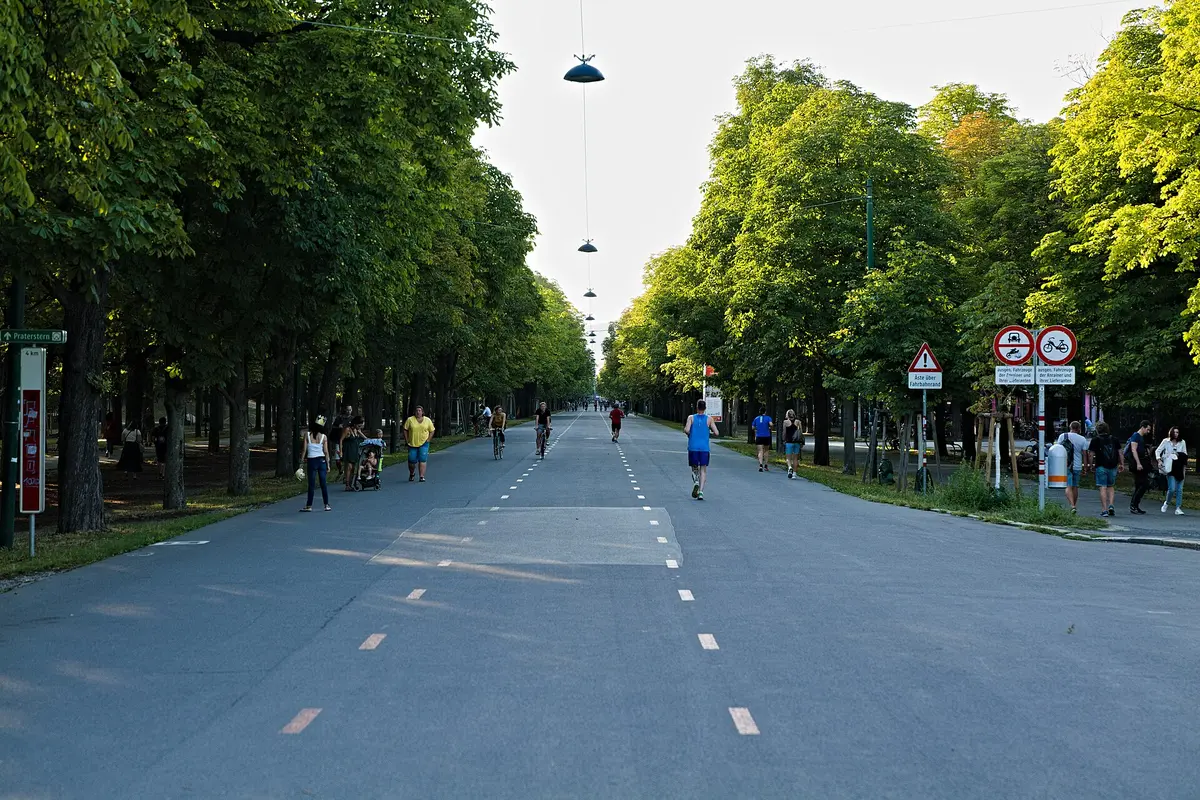
The Hauptallee is the Prater's main avenue, a straight, tree-lined route that runs from Praterstern to the Lusthaus, roughly 4.4 kilometres. It was cut through the forest in the 16th century to give access to the imperial hunting grounds, and rows of chestnut trees were planted between the roadway and the promenades. Private cars have been largely banned from it since 1964, so today it belongs to walkers, cyclists and runners. At the far end, the Lusthaus began as a hunting lodge and now houses a coffeehouse and a restaurant, a pleasant goal for a stroll if you arrive early. In 2019 Eliud Kipchoge ran the first marathon distance under two hours on a route made up mainly of laps of the Hauptallee.
A park with a long story
The Prater was first documented in 1403 and served as an imperial hunting ground from the 16th century, with entry limited to nobles and officials. In 1766 Emperor Joseph II opened it to everyone, and coffee houses, inns and early amusements soon followed. Over time it grew into the Wurstelprater funfair and a large green park of about six square kilometres. The 1873 World Exposition was held here, and the Rotunde built for it was, at the time, the largest dome in the world. Today the Mirage sits in a park that has been Vienna's place for an evening out for more than 250 years.
The Riesenrad, a short stroll away
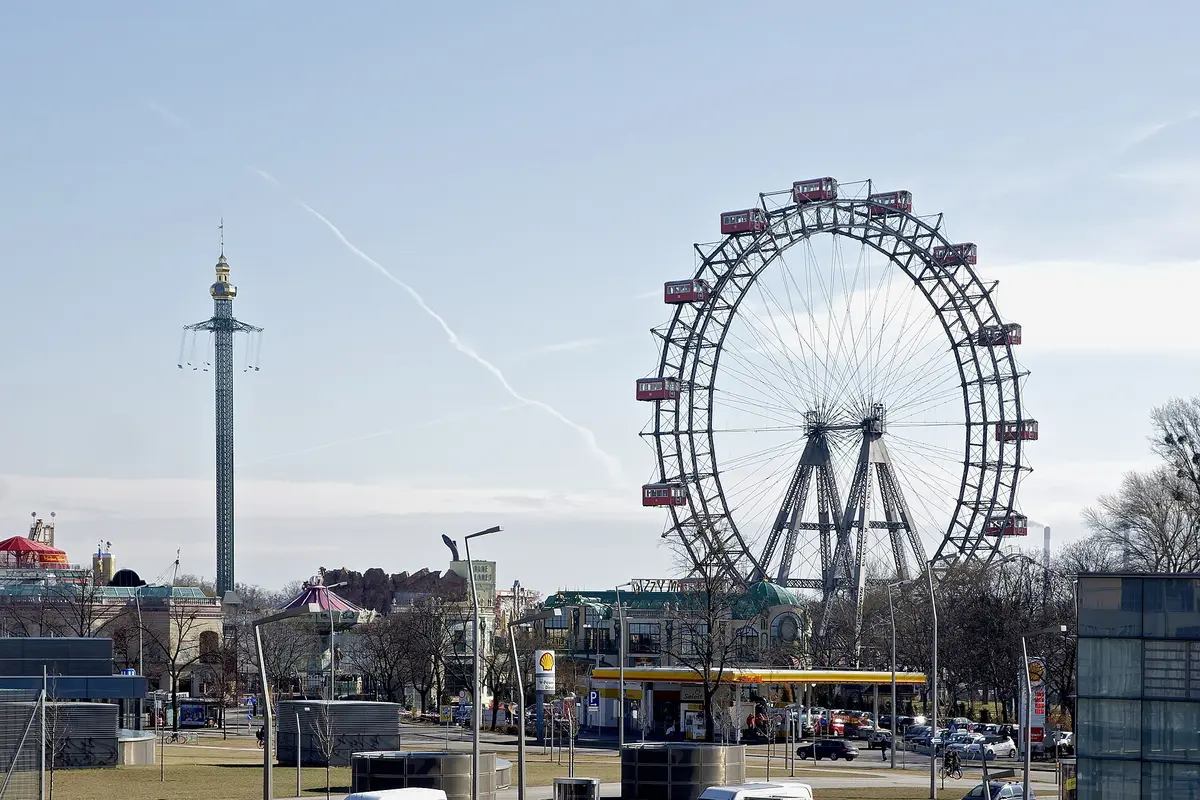
The Wiener Riesenrad stands at the entrance to the Prater amusement park. Built in 1897 for Emperor Franz Joseph's Golden Jubilee, it rises to 64.75 metres and was the world's tallest surviving Ferris wheel from 1920 to 1985. It was badly damaged in the Second World War, and when it was rebuilt only 15 of its 30 gondolas were replaced. A ride is a separate ticket sold by the wheel itself, and it is not part of the dinner show. Together with the Hauptallee, it makes a lovely way to spend the hour before dinner.
Read next: Vienna's Ball Season And Booking Ahead
Why Strauss belongs in the Prater
Johann Strauss II, the Waltz King, wrote more than 500 waltzes, polkas, quadrilles and marches, and the Prater even appears in his work: a song from 1864, Was macht denn der Prater, became a hit in its day, and its refrain about there being only one imperial city, Vienna, turned into a popular household phrase. The waltz itself began around 1750 as a couples dance among country people in Bavaria, Tyrol and Styria, and became fashionable in Vienna from about the 1780s. An evening of Strauss music in the Prater is therefore very much at home, in the city where the waltz became fashionable.
Read next: Johann Strauss II And The Waltz
What you will hear
The organiser says the programme follows Johann Strauss throughout the evening: the Blue Danube Waltz, rousing polkas and the Radetzky March, with the Tritsch-Tratsch Polka and the Auf der Jagd Polka among the pieces. The Blue Danube was first performed in February 1867 and became one of the most popular works in the classical repertoire. The Radetzky March was written by his father, Johann Strauss I. In concert halls it has a clapping tradition: quiet clapping the first time the melody is played, thunderous clapping the second. Join in when the host invites you.
What you will see
Between the musical pieces, the organiser lists ballet, soprano singing, a violin solo and humorous show interludes, with the four courses served alongside. The violin solo is played on an electric violin and includes modern pop pieces. A presenter guides you through the programme in English, tells the stories behind the pieces and draws the audience in. The organiser describes the result as concert, theatre and dinner combined without one interrupting the other. After the show, you can speak with the artists and take photos, a nice finish to the evening.
Dress, language, children and access
The dress code is casual chic, and the show is hosted in English. Children are welcome from age 5, and a children's menu is available. The venue is air-conditioned and heated, so it is comfortable in every season, though a cloakroom for jackets, large bags, backpacks and umbrellas is compulsory and carries a fee. The organiser says the venue is accessible and asks you to mention any accessibility needs in the notes when you book, so that it can assign suitable seats. Parents will like that the organiser admits children from age 5 and offers a children's menu, so younger guests can join the dinner properly rather than watching from the side. The booking page we link to also lists the evening as wheelchair accessible.
Timing the evening
Arriving early is the single best tip. The organiser strongly recommends being there before the start so you can take your seat calmly and enjoy the first course. Your booking confirmation shows the entry and start times for your date. If you arrive late you can still attend, but you will be asked to wait for applause before entering the room. There is a break after the first half, when the main course is served. The booking page lists the evening at about three hours, so plan your return to the U-Bahn accordingly. The same stops you used to arrive, Messe-Prater and Praterstern, take you back, and the organiser's tram and bus mentions give you an alternative.
Who this isn't for
If you are not keen on a long evening, or you would rather not eat during a show, a shorter concert elsewhere in Vienna may suit you better, and the organiser's Show Only ticket skips the dinner. Children under 5 are not admitted. Anyone who prefers to head back to the city centre early should allow for the journey from the Prater. For everyone else, it is a lively, friendly night out in a park with plenty of character.
Frequently asked questions
How do I get to the Strauss Dinner Show?
Take the U2 to Messe-Prater, then walk about five minutes. Alternatively, take the U1 or U2 to Praterstern and walk about ten minutes through the Prater. Search for Mirage in your map app.
What is the Hauptallee?
The Hauptallee is the Prater's main avenue, about 4.4 kilometres long between Praterstern and the Lusthaus, lined with chestnut trees. Private cars are largely banned, so it is popular with walkers, cyclists and runners.
Is the Riesenrad included in the dinner show?
No. The Riesenrad is a separate attraction at the entrance to the Prater, with its own ticket. It is a pleasant stop before or after the show.
What should I wear?
The organiser recommends casual chic. A cloakroom is compulsory for jackets, large bags, backpacks and umbrellas, and it carries a fee.
Is the show in English?
Yes. A presenter guides the evening in English and tells the stories behind the pieces, and the music itself needs no translation.
Can I drive and park nearby?
Yes. The organiser lists two large car parks close by, including the Campus Prater underground garage. Coaches can stop directly in front of the Mirage.
Sources